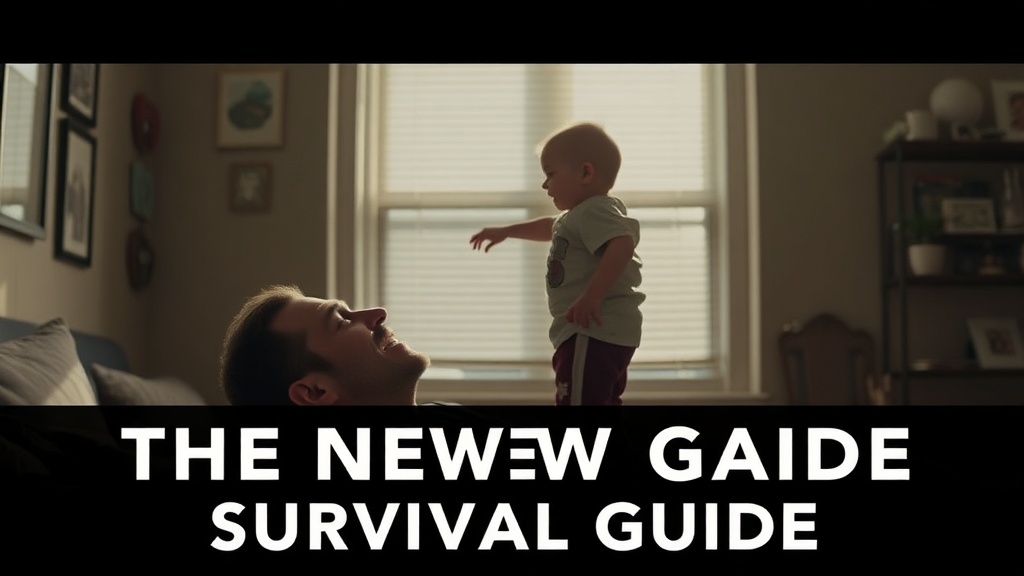
The New Dad Survival Guide: Thriving in Your First Year of Fatherhood

What Does a New Dad Really Need to Know?
This guide covers the practical skills, emotional adjustments, and gear decisions that separate surviving fatherhood from actually enjoying it. You'll find specific product recommendations, evidence-based sleep strategies, and honest talk about the mental load — no sugarcoating, no fluff. Whether you're three weeks in or still waiting for the due date, these tactics help you show up as the parent you want to be without burning out.
How Much Sleep Do New Dads Actually Get?
New dads average 5–6 hours of fragmented sleep per night during the first three months. This isn't just exhausting — it impairs decision-making, mood regulation, and even driving safety. The good news? Strategic shifts (not just "sleep when the baby sleeps") can make those hours more restorative.
The night shift rotation. If your partner is breastfeeding, you're not off the hook. Take over diaper changes, burping, and settling after feeds. Some couples adopt a "split shift" approach — one parent handles 10 PM to 3 AM, the other takes 3 AM to 8 AM. This gives each person a solid block of uninterrupted sleep.
Daytime recovery tactics. If overnight stretches are non-negotiable, prioritize 20-minute power naps. Longer naps leave you groggy. Apps like Sleep Cycle can help you wake during lighter sleep phases. Worth noting: caffeine has a half-life of 5–6 hours, so cut it off after 2 PM.
Your sleep environment matters. Blackout curtains aren't just for nurseries. The Eclipse Brandenburg blackout curtains block light effectively without looking industrial. White noise helps too — the LectroFan Classic masks household sounds and costs less than $50.
What Gear Do You Actually Need Versus What's Marketing?
You'll spend roughly $1,000 on genuinely useful items in the first year. The other $2,000–$4,000? Often unused, outgrown in weeks, or bought out of anxiety. Here's the breakdown.
The non-negotiables. A safe sleep space (the SNOO Smart Sleeper works well but costs $1,695; the Graco Sense2Snooze at $329 offers similar features for less), a car seat (hospitals won't discharge you without one), and a diaper changing station. That's it for the first month.
| Item | Budget Option | Upgrade Worth Considering | Skip Entirely |
|---|---|---|---|
| Monitor | VTech DM221 audio monitor ($35) | Nanit Pro with breathing wear ($379) | Wearable "smart" socks (false alarms abound) |
| Diapers | Kirkland Signature (Costco) — roughly $0.18 per diaper | Pampers Pure Protection (better for sensitive skin) | Cloth diapers (unless you enjoy laundry as a hobby) |
| Carrier | Boba Wrap ($45) — steep learning curve but versatile | Ergobaby Omni 360 ($179) — works from newborn to toddler | Front-facing "crotch dangler" carriers (bad for hip development) |
| Bottle | Dr. Brown's Original ($20 for 3) | Comotomo Baby Bottle ($24 each) — easier to clean | Bottle warmers (a mug of warm water works fine) |
The catch? Babies are individuals. Buy single items before committing to bulk packs. That $200 wipe warmer? Most babies don't care. But some do — which is why starting small saves money long-term.
Secondhand safety rules
Cribs, clothing, and strollers accept used gear. Car seats and breast pumps? Never. Expiration dates matter — car seat plastic degrades, and pump motors lose suction. Check the NHTSA car seat guidelines for installation help and recall notices.
How Do You Support Your Partner Without Burning Out?
Postpartum recovery takes 6–8 weeks minimum (longer after C-sections). During this window, physical support — not just emotional reassurance — prevents resentment from building. The goal isn't martyrdom; it's sustainable teamwork.
Own specific domains. Don't ask "what can I do?" — that's mental load. Take complete ownership of dishes, trash, or grocery runs. When you notice diapers running low, order more before you're out. The Amazon Subscribe & Save program delivers predictable supplies at 15% off.
Feeding support looks different depending on method. If breastfeeding: bring water, snacks, and a phone charger to nursing sessions. Handle all bottle washing. If formula feeding: learn the ratios by heart (it's not "close enough" — precise measurements matter). The Baby Brezza Formula Pro Advanced ($230) mixes bottles at body temperature automatically. Pricey, but at 3 AM, you'll appreciate it.
Here's the thing: postpartum depression affects up to 1 in 7 mothers — and 1 in 10 fathers. Watch for withdrawal, anger (depression often masks as irritability in men), or loss of interest in previously enjoyed activities. The Postpartum Support International helpline (1-800-944-4773) offers free resources for both parents.
What's the Real Deal with Bonding?
Attachment doesn't require mystical "instinct" — it builds through repeated, responsive interactions. Skin-to-skin contact, often framed as a "mom thing," works for dads too. Hold your baby against your bare chest (shirtless, baby in diaper only) for 20–30 minutes daily. This regulates their temperature, heart rate, and stress hormones. Plus, you smell different than your partner — variety in caregivers actually benefits development.
The "conversation" method. Even pre-verbal infants engage in back-and-forth communication. When your baby coos, pause, then respond with similar sounds. This turn-taking — not just talking *at* them — builds language foundations. Research from the Zero to Three organization confirms these interactions matter more than educational videos or flashcards.
Physical play develops differently than people assume. Babies need gentle motion — rocking, swaying, slow dancing — before they're ready for roughhousing. Wait until neck control develops (around 4–6 months) before any bouncing or lifting games.
How Do You Keep Your Relationship Intact?
Relationship satisfaction drops for 67% of couples after having a baby. This isn't inevitable — but preventing collapse requires deliberate effort during exhaustion.
The 10-minute rule. Check in daily for ten minutes — not about logistics (who's picking up milk), but about emotional states. "What's something that frustrated you today?" This maintains intimacy without demanding hour-long conversations that won't happen.
Date night alternatives. Babysitters are expensive. Create "micro-dates" instead: Thursday evening cheese and crackers after bedtime, or a podcast you only listen to together during stroller walks. The Jabra Elite 4 Active earbuds ($120) let each parent listen to different content while walking together — connection without forcing identical interests.
Sex often changes postpartum — physically, hormonally, and logistically. Patience isn't just nice; it's medically necessary (most providers recommend waiting 4–6 weeks). When intimacy resumes, it may feel different. Lubrication helps — the Good Clean Love BioNude Ultra Sensitive formula works well and avoids parabens. Communication matters more than performance.
What About Work and Identity?
Paternity leave policies vary wildly — the U.S. has no federal paid leave requirement, while Canada offers up to 63 weeks of shared parental benefits through Employment Insurance. If you're eligible, take the full allotment. Research shows fathers who take leave maintain stronger bonds with children decades later.
The return-to-work transition hits differently than expected. You'll be tired (obviously), but also distracted — wondering what's happening at home. Set boundaries early: no work email during feedings, for example. The Freedom app ($8.99/month) blocks distracting sites across all devices.
Your identity shifts. "Father" becomes part of how you see yourself — but shouldn't replace everything else. Maintain one non-parent hobby, even if reduced. That Sunday morning basketball game? Keep it, even if it's every other week instead of weekly. A diminished version of your former self beats total erasure.
When Should You Actually Worry?
Most parenting fears are statistically unfounded. SIDS, while devastating, affects approximately 38 per 100,000 live births — and rates drop dramatically with safe sleep practices (back sleeping, firm surface, no loose bedding). Fevers in newborns under 3 months require immediate medical attention. Otherwise? Spit-up, irregular breathing patterns, and crying peaks (typically 6–8 weeks) are normal.
Trust your instincts when something feels wrong, but don't let anxiety consume you. The American Academy of Pediatrics' HealthyChildren.org offers symptom checkers and reliable guidance — bookmark it rather than falling down Google rabbit holes at midnight.
Year one ends. The baby becomes a toddler — new challenges, new joys. You're not the same person who walked into that delivery room. That's the point.