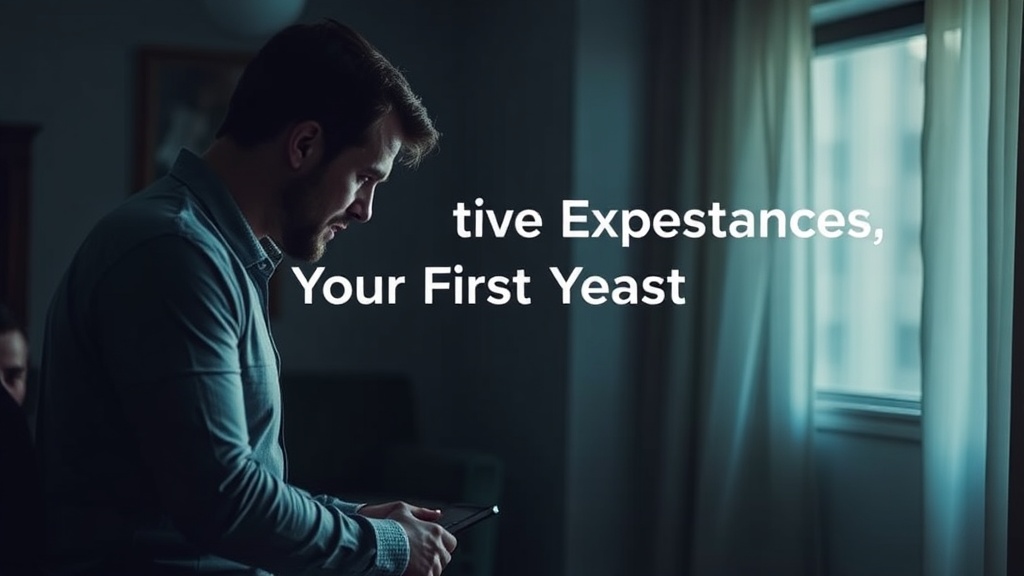
Setting Realistic Expectations for Your First Year of Fatherhood

It is 3:15 AM. You are sitting on the edge of the bed, staring at a pile of laundry that seems to have multiplied overnight, while your infant finally falls into a shallow sleep. You had this vision of yourself as the calm, capable father who handles every diaper change with precision and maintains a pristine living room. Instead, you feel like you are just trying to keep your head above water. This discrepancy between the version of fatherhood you imagined and the reality of the first twelve months is where much of the stress begins. Understanding this gap is the first step toward managing your mental health and your relationship.
The first year of parenthood is rarely the polished, organized experience people describe in brochures. It is messy, loud, and often feels completely out of your control. When your expectations are set too high—whether they are your own or those you think society expects of you—every minor hiccup feels like a personal failure. This guide looks at how to recalibrate your mindset to handle the unpredictability of a new baby without losing your sense of self or your sanity.
How do I deal with the feeling of failing as a new dad?
That feeling of "failing" often stems from a desire to be perfect. You want to be the dad who has a structured routine, a clean house, and a happy partner. But babies do not follow schedules—they dictate them. When a child wakes up sick or a nap is skipped, your "plan" disappears. This isn't a failure of your skill; it is just the nature of the job. One way to mitigate this is to stop aiming for perfection and start aiming for "good enough." If the baby is fed, safe, and loved, you are winning. The rest is secondary.
Try to separate your identity from your daily output. If you didn't get to the gym or finish that woodworking project because you were busy soothing a teething infant, that doesn't make you a bad person or a bad father. It makes you a present one. To help keep things grounded, it helps to look at evidence-based advice on child development. The American Academy of Pediatrics offers great resources that can help you understand what is actually "normal" at various stages, which can take the guesswork out of many much-feared milestones.
Can I maintain my identity while being a parent?
One of the biggest fears for new dads is that the "old you" is gone forever. You used to be the guy who went hiking every weekend or spent hours gaming with friends. Now, your free time is measured in fifteen-minute increments between feedings. It is easy to let your hobbies and interests slip into the background, but doing so can lead to resentment or a sense of loss. You aren't just a "dad" now; you are still the person you were before the baby arrived, just with a much more demanding schedule.
The key is not to find large blocks of time, but to find small, intentional moments. This might mean a twenty-minute walk alone once a week or a specific hour on Sunday mornings where you are "off duty." These micro-breaks are vital for your mental well-being. If you feel like you are losing your grip on who you are, reach out to your community. Whether it is a local hobby group or just a text thread with your old friends, staying connected helps maintain that sense of self. You can also find community support through platforms like r/DaddAdvice or similar forums where men discuss the shift in identity.
How can I support my partner when everything feels chaotic?
Often, the tension in a new household comes from the way partners communicate during high-stress periods. You might think you are being helpful by jumping in, but if your approach doesn't align with what your partner needs, it can actually create more friction. Communication shouldn't be about who did more chores—it should be about how you are both feeling. Instead of asking "What can I do?" (which adds the mental load of decision-making to them), try being more proactive. See the dishwasher is full? Empty it. See the diaper bag is low? Refill it.
Practical support looks like taking the lead on things that don't require a direct question. It also means being vulnerable. If you are feeling overwhelmed, say so. A healthy partnership relies on being able to say, "I'm struggling right now," without fear of judgment. This transparency allows you both to work as a team rather than two individuals struggling in parallel. It also helps to realize that the current chaos is a season, not a permanent state of being. The sleepless nights and the constant laundry are temporary, even if they feel eternal in the moment.
When you find yourself spiraling into a sense of inadequacy, remember that you are learning a brand new skill set in real-time. No one expects you to be an expert on day one. There will be mistakes—you will forget a diaper, you will lose your temper, or you will forget an appointment. These moments are part of the learning curve. The goal isn't to avoid the mess; it's to learn how to handle through it with a bit more grace and a lot more patience.
As you move through these first twelve months, keep your focus on the small wins. A successful nap, a quiet evening, or a moment of actual laughter with your partner—these are the things that build the foundation. The "perfect" version of fatherhood is a myth, but the real, messy, unscripted version is much more rewarding in the long run.